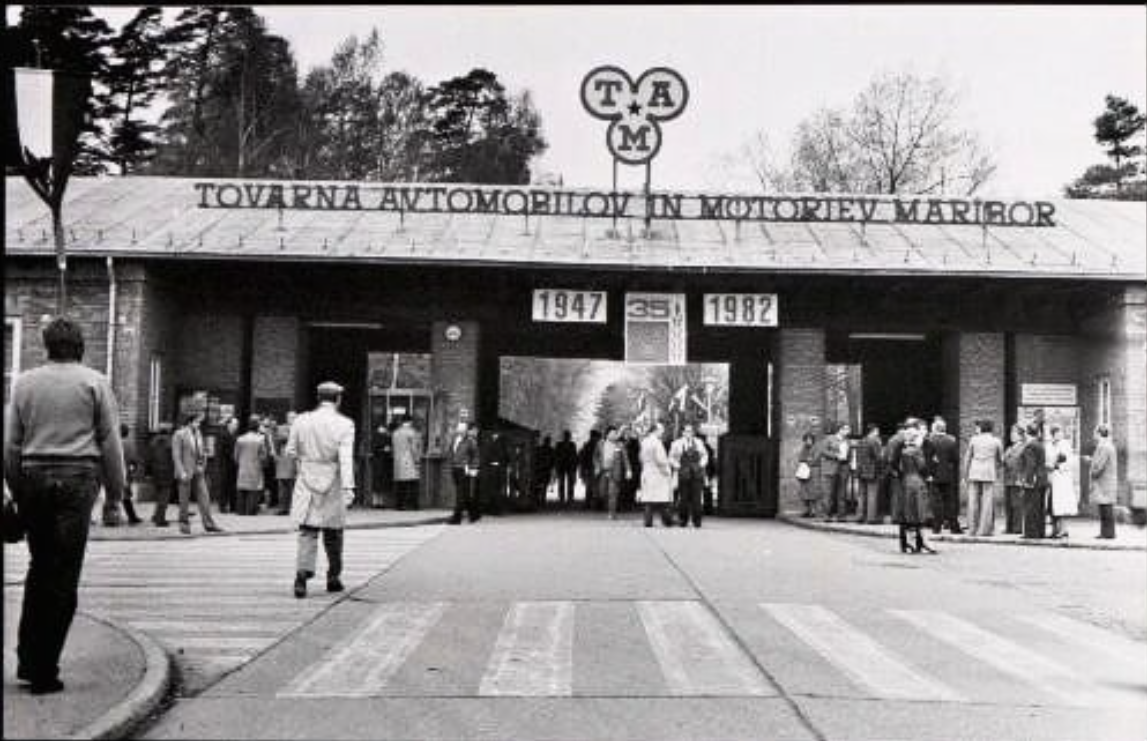
Mays as Turning Points: Key Events in TAM’s Early Years
Maj v TAM-u: mesec, ko so se rojevali tovarna, tehnologija in kolektiv
14. maj 1945. Nekdanji delavci porušene tovarne na Teznu so dobili poziv, naj se vrnejo na delo. V naslednjih dneh se jih je zbralo približno 4000. Niso prišli izdelovat tovornjakov. Prišli so odstranjevat ruševine, reševat stroje in ugotavljat, kaj je od velikanskega industrijskega kompleksa sploh ostalo. Iz tega procesa je nastala ena največjih slovenskih tovarn.
Toda maj je v zgodovini TAM-a veliko več kot datum začetka povojne obnove. V arhivih se pojavljajo majske zgodbe o novih proizvodnih linijah, izvoznih poslih, obiskih in delegacijah, štipendijah, stanovanjih, prehrani delavcev, varnosti pri delu, športu in kulturi. TAM je imel godbo, pevske in gledališke skupine, lutkovno in likovno sekcijo, kino, športna društva in celo lasten sistem izobraževanja. Tovarna je financirala kulturne ustanove, pošiljala mladino na jugoslovanska srečanja in gradila športno infrastrukturo.
Maja 1961 je bila tako v ospredju 15 metrov dolga avtomatizirana transferna linija z 21 operacijami; maja 1967 je 1000 zaposlenih in svojcev obiskalo prvomajsko prireditev; maja 1970 so merili proizvodnjo v stotinah vozil in izvoz v stotisočih dolarjev, hkrati pa je TAM pomagal mariborskemu gledališču. V devetdesetih je maj pomenil že neizplačane plače in približevanje stečaju, po letu 2000 pa predvsem ohranjanje spomina.
Če vse te majske drobce postavimo skupaj, dobimo zgodbo o TAM-u, ki je precej širša od tovornjakov: zgodbo o industriji, mestu, tehnologiji in več generacijah ljudi, ki so v tovarni delali, ustvarjali, peli, igrali, se izobraževali in živeli velik del svojega vsakdana.
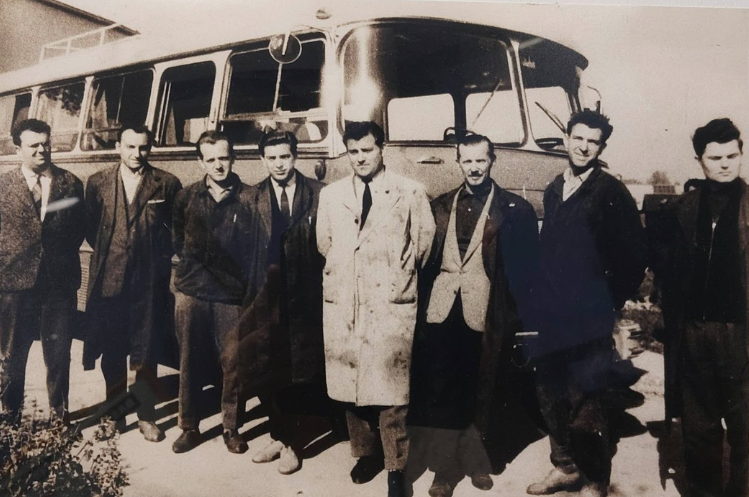
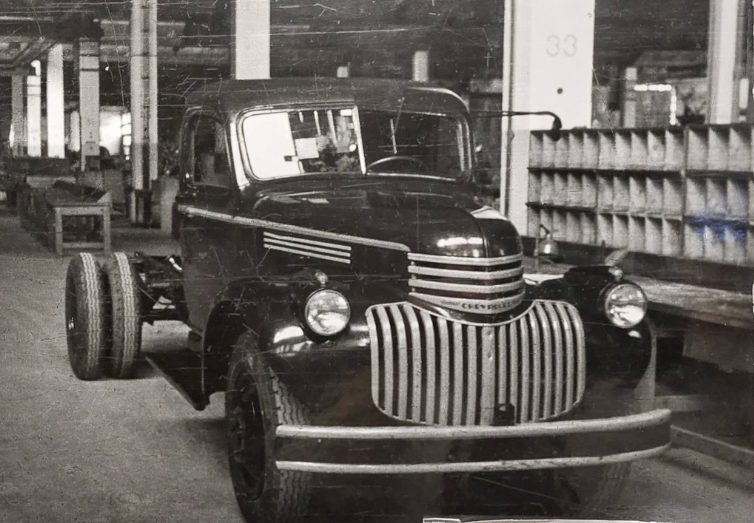
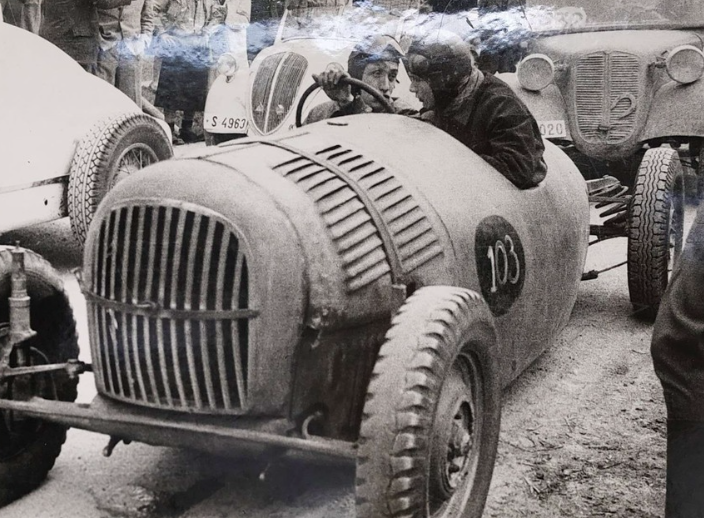
Maj 1945: 4,000 ljudi v ruševinah
Najpomembnejši majski datum je 14. maj 1945. Okrajni odbor Maribor – desni breg je takrat pozval nekdanje tovarniške delavce, naj se priglasijo na delovna mesta. Odziv je bil velik: oblikovali so delovne skupine s približno 4000 delavci, ki so pod strokovnim nadzorom odstranjevali ruševine in reševali stroje ter drugo opremo.
To je bila še vedno nekdanja nemška vojaška industrija. Kompleks je bil med vojno namenjen proizvodnji letalskih delov, zaradi bombardiranja pa močno poškodovan. Po osvoboditvi zato ni šlo za preprost ponovni zagon proizvodnje, ampak za skoraj popolno industrijsko obnovo.
Prav v maju 1945 se je začelo tudi iskanje novega proizvodnega programa. Tovarna se je sprva ukvarjala s sestavljanjem vozil v razstavljenem stanju, pozneje s popravilom ameriških tovornjakov, ki jih je dobila jugoslovanska vojska. Šele konec leta 1946 je bila sprejeta formalna odločitev o avtomobilski usmeritvi.
Maj 1945: začetek avtomobilske zgodbe
Zanimiva podrobnost je, da so se zamisli o proizvodnji avtomobilov na Teznu pojavile zelo zgodaj. Med predlogi je bila celo izdelava osebnih avtomobilov, vendar je bila povojna država bolj zainteresirana za tovornjake in druga gospodarska vozila.
TAM je zato svojo prvo veliko proizvodno zgodbo začel s tovornjaki. Leta 1947 je sledil Pionir, izdelan po licenci Praga RN, pozneje pa so prišli modeli, ki so TAM postopoma spremenili v največjega proizvajalca gospodarskih vozil v Sloveniji.
Maj in kulturni TAM
Eden najmanj poznanih vidikov zgodovine TAM-a je njegovo kulturno življenje.
V podjetju so delovale godba na pihala, mladinska in starejša godba, salonski orkester, tamburaški zbor, pevska, gledališka, lutkovna in likovna sekcija ter mladinski kino. Delavsko-prosvetno društvo Svoboda Tezno je imelo pomembno vlogo pri kulturnem življenju zaposlenih. Tovarna je imela tudi veliko večnamensko kinodvorano.
To pomeni, da so bili TAM-ovi delavci hkrati člani različnih pevskih, gledaliških, glasbenih in športnih kolektivov. Za zgodovino posameznih majskih predstav bi bilo treba pregledati še koledarje in številke internega glasila po posameznih letih, vendar je obstoj teh skupin dobro dokumentiran.
TAM je kulturo podpiral tudi zunaj lastnega kolektiva. Maja 1970 je bilo na primer zapisano, da je podjetje Slovenskemu narodnemu gledališču Maribor namenilo 10.000 dinarjev pomoči, v zameno pa naj bi TAM-ova rekreacijska služba dobila brezplačno gledališko predstavo.
Maj 1958: tovarna potrebuje izobražene ljudi
Majske vsebine internega glasila iz leta 1958 kažejo, da je TAM sistematično skrbel za izobraževanje kadrov. Objavljeni so bili prispevki o štipendijah in obveznostih iz štipendijskih pogodb.
To ni bila postranska dejavnost. Z razvojem proizvodnje je potreboval vse več strokovnih delavcev, zato je gradil lasten sistem strokovnega izobraževanja.
TAM je pozneje razvijal izobraževanje za številne kovinarske poklice in tehnične profile. Tovarna je tako proizvajala ne le vozila, ampak tudi lastne kadre.
Maj 1961: 15 metrov, 11 strojev, 21 operacij
Eden najbolj zanimivih tehnoloških zapisov je povezan z majem 1961.
TAM je imel transferno linijo za obdelavo glav valjev, dolgo približno 15 metrov. Na njej so izvajali kar 21 različnih operacij, povezovalo pa jo je 11 strojev.
Še pomembneje: linijo so razvili strokovnjaki TAM-a. Med njimi je kot konstruktor naveden Mirko Grčar, pri projektu pa so sodelovali strokovnjaki tehnične priprave proizvodnje, mehanične delavnice in elektrostroke.
To je dober primer prehoda TAM-a od licenčne proizvodnje k lastnemu tehnološkemu razvoju. Leto 1961 je bilo sicer prelomno tudi zaradi preimenovanja v Tovarno avtomobilov in motorjev Maribor in ustanovitve razvojnega inštituta.
Maj 1966: tovarna kot mesto v mestu
Maja 1966 je interno glasilo objavilo članek »Dotacije, dotacije, dotacije …«. Iz njega je razvidno, kako široko je bilo družbeno življenje podjetja.
TAM je podpiral gasilsko društvo, ribiško sekcijo, planinsko društvo, strelsko družino, foto-kino klub, podružnico šoferjev in avtomehanikov, pevsko sekcijo DPD Svoboda, športno društvo Kovinar, Zvezo mladine TAM in Zvezo borcev TAM.
Tovarna je bila tako mnogo več kot proizvodni obrat. Imela je svojo infrastrukturo družbenega življenja: šport, kulturo, izobraževanje, prehrano, rekreacijo in stanovanjsko politiko.
Maj 1967: 1000 ljudi na prvomajski prireditvi
Posebej podroben je majski zapis iz leta 1967.
29. aprila 1967 je TAM pripravil dvourno prvomajsko proslavo v hali C na razstavišču mariborskega sejma. Udeležilo se je je približno 1000 članov kolektiva in njihovih svojcev. V internem glasilu so zapisali, da so bili odzivi zelo dobri.
Istega obdobja pa niso zaznamovale samo proslave.
TAM je leta 1967 obravnaval tudi stanovanjske težave. Na razpis za posojila za gradnjo individualnih hiš se je prijavilo 188 delavcev. Pogojev ni izpolnilo 59 prosilcev, preostalih 129 pa je dobilo skupaj 91 milijonov starih dinarjev posojil.
V glasilu najdemo tudi pritožbe zaradi hladne malice, netočnega tehtanja in organizacije prodaje hrane. Uprava je zaradi tega restavraciji izrekla zadnji opomin.
Istega leta je TAM pripravljal tudi nov pravilnik o varstvu pri delu, saj je razvoj tehnologije prinesel nove proizvodne postopke in s tem nove varnostne zahteve.
Maj 1970: 515 vozil in več kot pol milijona dolarjev izvoza
Maja 1970 je že mogoče videti TAM kot velik industrijski sistem.
Aprila je bilo izdelanih 515 vozil, čeprav je bil plan 610. To je pomenilo 84,42 odstotka načrta. V prvih štirih mesecih je bilo izdelanih 2013 vozil, kar je bilo 437 manj od načrta.
Za maj je bil postavljen izvozni cilj 535.000 dolarjev. Naročil je bilo že za 652.275 dolarjev. Aprilski dejanski izvoz je znašal 252.272 dolarjev, v prvih štirih mesecih pa 1.235.658 dolarjev.
Istega maja je TAM prejel zlato plaketo podjetja Jugoimport Beograd za dolgoletno sodelovanje.
Maj 1970: TAM-ovci na srečanju mladine Jugoslavije
Med 23. in 24. majem 1970 je v Zagrebu potekalo sedmo majsko srečanje mladine Jugoslavije.
TAM je nanj poslal 15 svojih mladincev.
Ista majska številka Skozi TAM je objavila tudi prispevek »Učenci zgradili športni center pri TAM«, kar kaže na sodelovanje tovarne z mladino in lokalnim okoljem.
Maj 1986: 200.000. vozilo
Do osemdesetih je TAM postal eden največjih industrijskih sistemov v državi.
Leta 1986 je izdelal 200.000. vozilo in imel približno 8175 zaposlenih. Izvoz je dosegel okoli 40,5 milijona dolarjev.
To je bil vrhunec proizvodne velikosti, vendar že ne več nujno poslovnega zdravja. Podjetje je imelo velike finančne in organizacijske težave, ki so se v naslednjem desetletju končale s stečajem.
Maj 1996: zadnji maj velikega TAM-a
Stečaj TAM-a je bil uveden 3. junija 1996. Maj je bil zato zadnji mesec pred formalnim stečajem.
Med terjatvami zaposlenih so ostajale tudi neizplačane plače in druge obveznosti. Podjetje, ki je v najboljših časih zaposlovalo več kot 8000 ljudi, se je znašlo tik pred koncem.
Maj 1999: namesto proizvodnje pogajanja o ostankih
Tri leta pozneje je TAM še vedno nastopal v gospodarskih novicah, vendar ne več kot proizvajalec.
19. maja 1999 je bila napovedana ustanovitev konzorcija kupcev TAM-ovega premoženja. Na sestanek je bilo povabljenih približno 20 večjih podjetij, med potencialnimi ustanovitelji pa sta bila Slovenska razvojna družba in Mestna občina Maribor.
25. maja sta se o odprtih vprašanjih konzorcijske pogodbe pogovarjala vodja konzorcija Anton Čokl in mariborski podžupan Jože Protner.
Maja 1945 je bilo vprašanje, kako ponovno usposobiti tovarno. Maja 1999 je bilo vprašanje, kaj narediti z njenimi ostanki.
Maj 2013 in 2014: TAM postane zgodovina
Maja 2013 se je TAM vrnil v javnost kot zgodovinska tema. 30. maja je Mariborska knjižnica v okviru dogajanja na Teznu pripravila prireditev TAM na razstavi, spletu in filmu, z razstavo fotografij in projekcijo dokumentarnega filma Umrli gigant.
Maja 2014 so začeli sistematično zbirati še fotografije, dokumente, vabila, pohvale, tiskovine in osebne spomine nekdanjih delavcev.
To je morda najlepši zaključek majske zgodbe.
Maja 1945 so ljudje prihajali na Tezno reševat stroje. Maja 2014 so prihajali reševat spomin nanje.
In med tema dvema majema je nastala zgodovina ene največjih slovenskih tovarn: od 4000 ljudi, ki so leta 1945 odstranjevali ruševine, do 8175 zaposlenih na vrhuncu, od prvih sestavljenih tovornjakov do lastnih razvojnih rešitev, od godbe, gledališča in lutk do izvoza za več deset milijonov dolarjev.
Maj je zato eden najboljših mesecev za pripoved o TAM-u: v njem se skoraj v zgoščeni obliki vidi celotna življenjska krivulja tovarne – rojstvo, rast, tehnološki razvoj, življenje kolektiva, vrhunec, propad in nazadnje spomin.
May at TAM: The Month When the Factory, Technology and the Workforce Took Shape
May was an unusually important month in the history of Tovarna avtomobilov in motorjev Maribor (TAM), one of Yugoslavia’s largest industrial companies. From the first post-war days, when workers returned to a heavily damaged factory, to technological breakthroughs, trade cooperation, cultural events and, eventually, the final years of the company, May repeatedly marked important moments in TAM’s history.
14 May 1945: the workers return
One of the most important dates is 14 May 1945. Only days after the end of the Second World War in Europe, the District Committee of Maribor – Right Bank called on former factory workers to return to work.
The factory had suffered extensive damage during the war. Between January 1944 and March 1945, the complex was bombed nine times. During the German occupation, TAM had employed thousands of people and had been involved in the production of aircraft components. By the end of the war, however, large parts of the industrial complex were damaged or destroyed.
The first post-war task was therefore not vehicle production but reconstruction. Around 4,000 workers were soon organized into work groups to clear rubble and rescue machinery, equipment and other usable material.
This was the practical beginning of TAM’s post-war history.
The first years were devoted mainly to repairing the factory and assembling vehicles from disassembled components. Production gradually expanded to include a forge, compressor station, sheet-metal forming, spring production and painting facilities.
The company’s later transformation into a major vehicle manufacturer was therefore anything but immediate. It began with reconstruction work and the recovery of machinery.
From reconstruction to vehicle production
In the first post-war years, Yugoslavia needed trucks and other commercial vehicles much more urgently than passenger cars. Ideas about producing passenger cars existed, including proposals involving Volkswagen and Porsche designs, but the authorities considered mass passenger-car production premature.
TAM consequently concentrated on trucks and special vehicles.
One of the important early products was a dump truck based on the Praga chassis. The company later developed its own vehicle programmes and gradually became an increasingly integrated manufacturer.
A major step came in 1957, when TAM concluded a licence agreement with the German company Klöckner-Humboldt-Deutz (KHD) for the production of 4.5-ton trucks. The agreement gave TAM access to modern German technology and helped accelerate the development of its own engineering capabilities.
At the end of 1946, the company formally became Tovarna avtomobilov Maribor – TAM Tezno.
Tito and the factory in 1945
May 1945 was also significant because of the attention the newly liberated factory received from the highest political leadership.
Josip Broz Tito visited the factory around the end of May or the beginning of June 1945, inspecting the damaged industrial complex, its machinery and the work being carried out by the employees.
The visit was symbolic as well as practical. TAM was expected to become part of the industrial reconstruction of the new Yugoslavia.
Tito returned to the factory on later occasions, including visits in 1947 and 1958.
May as a month of technology
May was not only about political and organizational milestones. The company’s internal publications also reveal that spring was an important period for presenting new technology, production results and development projects.
A particularly interesting example comes from May 1961.
At the time, TAM was developing an automated transfer line for machining cylinder heads. The line was approximately 15 metres long and incorporated 21 machining operations and 11 smaller machines.
The project had an unusual background. Several Yugoslav factories had reportedly refused to manufacture such a system. TAM specialists therefore developed it themselves.
The constructor was Mirko Grčar, while the project involved specialists from production preparation, the mechanical workshop and electrical engineering.
The same period marked an important organizational transformation. In 1961 the company changed its name to Tovarna avtomobilov in motorjev Maribor and established an Institute for Engines and Vehicles.
The new development structure included engineering, a prototype workshop, engine and vehicle testing facilities, as well as metallurgical, physical and chemical laboratories.
TAM was thus becoming more than an assembly plant. It was developing into a technologically complex industrial system with its own research and development capabilities.
Production, exports and international cooperation
The May issues of TAM’s internal publications provide a surprisingly detailed picture of the company’s economic life.
In April 1970, for example, TAM produced 515 vehicles, against a plan of 610. This represented 84.42% of the monthly plan, or roughly 20.6 vehicles and chassis per working day in the assembly operation.
Production during the first four months of the year reached 2,013 vehicles, which was 437 below the planned figure.
Exports were also closely monitored. The April export plan amounted to US$460,000, while orders were worth US$319,744 and actual exports reached US$252,272. In the first four months of 1970, exports totalled US$1,235,658.
The situation for May was more encouraging: the export plan was US$535,000, while orders already stood at US$652,275.
TAM also received a gold plaque from Jugoimport Beograd for long-term cooperation, awarded in connection with Jugoimport’s 20th anniversary.
These figures show that TAM was not simply producing vehicles for the domestic Yugoslav market. International trade and export performance had become an important part of its economic strategy.
May Day celebrations — and a thousand TAM employees
TAM’s history was not limited to factories, machines and production figures.
On 29 April 1967, the company held a two-hour May Day celebration in Hall C of the Maribor Fairgrounds. Around 1,000 members of the collective and their relatives attended.
The internal newspaper recorded generally positive reactions, although some employees suggested that future celebrations should be held outside the company and outside working hours.
Such events illustrate the importance of the factory as a social institution. TAM was not simply a place where people worked. It had its own sports, cultural and recreational infrastructure and organized activities for employees and their families.
Theatre, music and puppets
TAM’s cultural life was particularly extensive.
In 1949, the company established the trade-union cultural and artistic association Maks Durjava. In 1952, this developed into DPD Svoboda Tezno.
Its activities included a youth and senior brass band, a salon orchestra, a tamburitza ensemble, a choir, a theatre group, a puppet theatre, an art section and a youth cinema.
TAM also had a large multifunctional cinema hall.
This cultural infrastructure was typical of the large Yugoslav industrial enterprises of the period. A factory of TAM’s size functioned almost like a small city: it provided employment, but also organized cultural, sporting and social life.
The company even supported professional cultural institutions. In April 1970, TAM management decided to provide 10,000 dinars in financial assistance to the Slovene National Theatre Maribor (SNG Maribor). In return, the theatre offered TAM’s recreation service a free performance.
This kind of cooperation demonstrates how closely the industrial and cultural institutions of Maribor were connected.
Young people and the factory
Youth activities were another recurring feature of TAM’s May calendar.
On 23 and 24 May 1970, the Seventh Yugoslav Youth Meeting was held in Zagreb. TAM sent 15 young workers to the event.
At the same time, young people were participating directly in activities around the factory. A May 1970 issue of Skozi TAM, one of the company’s internal publications, reported on students who had built a sports centre near TAM.
The factory was therefore also a training ground for younger generations — not only professionally, but socially and culturally.
Everyday problems behind the statistics
The internal newspapers are valuable precisely because they reveal things that official company histories often omit.
In May 1967, for example, 188 TAM workers applied for loans to build individual houses. Fifty-nine did not meet the required conditions, while 129 received loans totalling 91 million old dinars. Because available funds were insufficient, many applicants received less than they had requested.
The same publications also recorded complaints about the factory restaurant, including the sale of cold meals, inaccurate weighing and poor sales organization. Management issued a final warning to the restaurant, stressing that prices should not exceed those in Maribor’s self-service restaurants and shops.
Occupational safety was another issue. In 1967 TAM introduced new safety rules to replace regulations dating from 1959. The new rules reflected both the 1965 Fundamental Occupational Safety Act and changes in production technology.
These details make the internal publications particularly valuable: they show the factory not only as an industrial giant, but as a workplace with very ordinary problems.
From giant to bankruptcy
TAM reached its greatest scale during the later decades of Yugoslavia.
In 1986, the company produced its 200,000th vehicle and employed approximately 8,175 people. Its exports were worth around US$40.5 million.
But the economic and political transformation of Yugoslavia in the late 1980s and early 1990s fundamentally changed the conditions in which TAM operated.
The company struggled with falling demand, financial problems and the loss of its traditional Yugoslav market. Bankruptcy proceedings were opened on 3 June 1996.
That makes May 1996 particularly symbolic: it was the last full month before the formal opening of bankruptcy proceedings. Claims by former employees included unpaid wages and other outstanding payments covering years of financial difficulties.
TAM after TAM
The story did not completely end with bankruptcy.
In May 1999, efforts were still being made to establish a consortium of potential buyers for TAM’s property. On 19 May, around 20 larger companies were being considered as possible participants, alongside the Slovenian Development Corporation and the Municipality of Maribor.
On 25 May, consortium leader Anton Čokl and Maribor deputy mayor Jože Protner discussed unresolved issues surrounding the consortium agreement.
The industrial giant was gone, but its physical infrastructure and economic legacy remained an important issue for Maribor.
Remembering TAM
May later became a month not only for remembering TAM’s industrial history, but also for preserving its memory.
On 30 May 2013, the Maribor Library organized the event TAM na razstavi, spletu in filmu (“TAM in Exhibition, Online and on Film”) as part of the Tezno Festival.
The programme included the exhibition Po sledeh TAM-a: ujeto v fotografski spomin (“In the Footsteps of TAM: Captured in Photographic Memory”) and a screening of the first part of Bojan Labovič’s documentary Umrli gigant (“The Dead Giant”).
The materials came from institutions including the Regional Archives Maribor and the University Library Maribor.
In 2014, the Maribor Library also called on former TAM employees and local residents to contribute photographs, documents, invitations, commendations, printed material and personal memories.
It was an important reminder that TAM’s history cannot be reconstructed from production statistics alone.
Why May matters
Looking through the history of TAM, May emerges almost as a miniature timeline of the entire company.
14 May 1945 represents reconstruction and the return of the workforce. The late May visit by Tito reflects the political importance attached to the factory. The 1950s brought technological and production expansion. The 1960s saw automation, research and the growth of employee welfare. The 1970s combined exports, technological development, youth activities and an extensive cultural programme. The 1980s represented the peak of TAM’s industrial power. The 1990s brought decline, bankruptcy and attempts to preserve or restructure what remained.
And beyond the dates and numbers, May reveals something else: TAM was never only a vehicle manufacturer.
It was simultaneously a workplace, engineering centre, educational environment, cultural institution, sports community and major part of Maribor’s urban identity.
That is perhaps why the history of TAM remains visible long after the factory itself disappeared. Its vehicles were exported across the world, but its most enduring legacy was created among the thousands of people who worked, learned, performed, played sport and built their lives around the factory in Tezno.